The following post is the documentation for a pair of Goldhaubs I entered in The 25th Annual Tournament of the White Hart in the Shire of Port Oasis in the Kingdom of AEthelmearc.
If you are not familiar with this fabulous event, the Tournament of the White Hart is styled after the idealized medieval tournament, and is all about the pomp and circumstance, courtly virtues, and celebration.
The hallmark of the event is the heavy weapons tournament in which to compete each combatant must fight not for themselves, but in the name of someone who inspires them. This could be a romantic partner, but equally it may be a friend or simply someone they admire and seek to honor.
All the consorts are invited to sit in the gallery and enjoy the spectacle, and throughout the tournament the gallery will often call over the fighters to ask them questions on a range of topics, from their inspiration that day, or their thoughts on certain chivalric virtues, to what their preferred fighting style is and what challenges have they overcome.
At times the gallery may also choose to present the combatants with with challenges. This could be to fight a bout with a less familiar weapon style, to share a period song or poetry, or sometimes something silly and lighthearted like to do a sack race or arm-wrestle instead of the “traditional” bout.
At the end of the day, all the days consorts, as well as Past Consorts of the White Hart and the current Consort and Combatant of the White Hart will gather and choose from amongst the combatants the individual they felt best represented and honored their inspiration and best exemplified the courtly virtues.
The fighter chosen and their inspiration are then named the newest Combatant and Consort of the White Hart, get to bear the title and wear the regalia for the following year, and also takes on the responsibilities to run the tournament and host the gallery at the end of that year to find their successors.
This year was the 25th Anniversary of White Hart, what is traditionally considered the “silver jubilee’, and as such the A&S had a theme of silver, or celebration. So of course it makes perfect sense that I made two things utterly covered in…gold (and completely devoid of silver).
However! I do believe a celebration always calls for a good hat, and on the tournaments theme of honoring those who inspire you, my goldhaubs have been very much inspired by women whom I greatly admire.
Documentation for a Pair of Goldhaubs
Entered in the Arts & Sciences Competition at The 25 Tournament of the White Hart in the Shire of Port Oasis, AEthelmearc
by
The Honorable Lady Rannveig Hrajshvelgsneys Alfvinsdottir, 20th Lady of the White Hart.
Type of Garment:
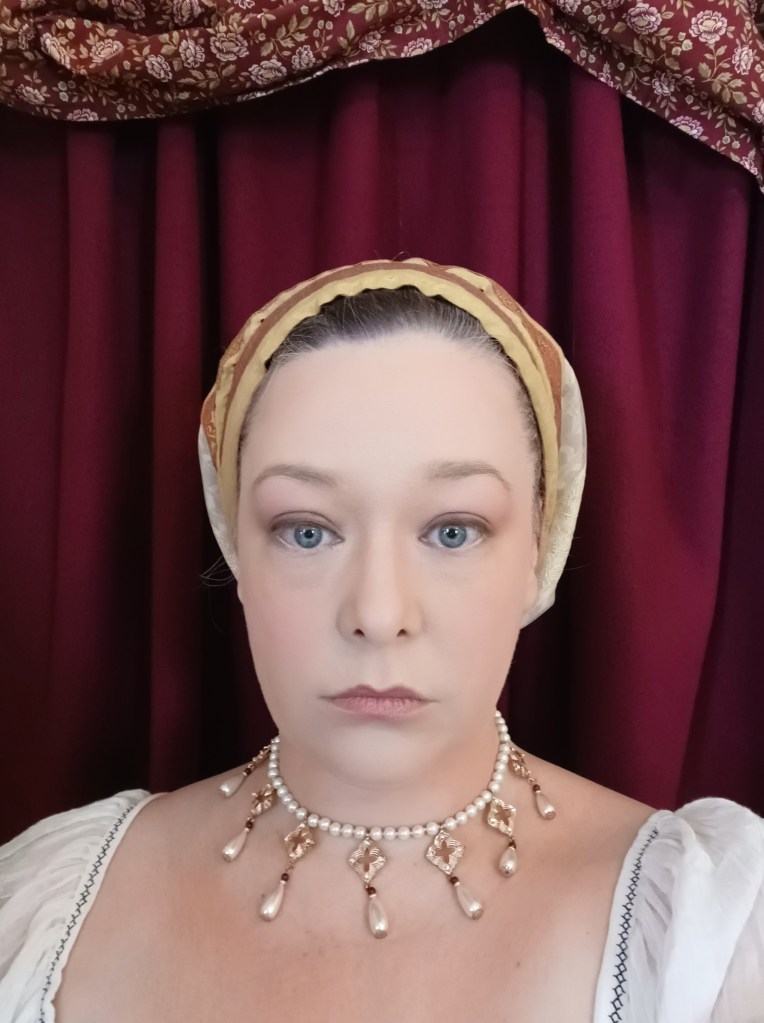
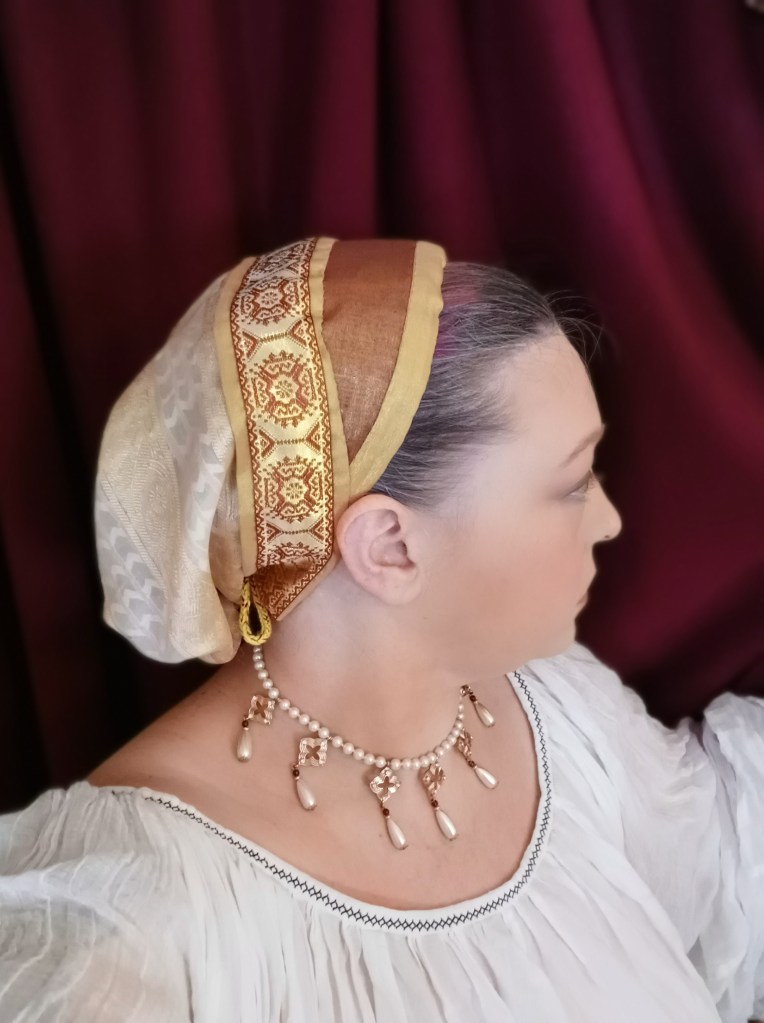
Pair of German Goldhaubs (Fancy Caps) circa 1540’s. One is displayed here, I am wearing the other. Please feel free to come accost me about seeing my silly headwear!
Based on:
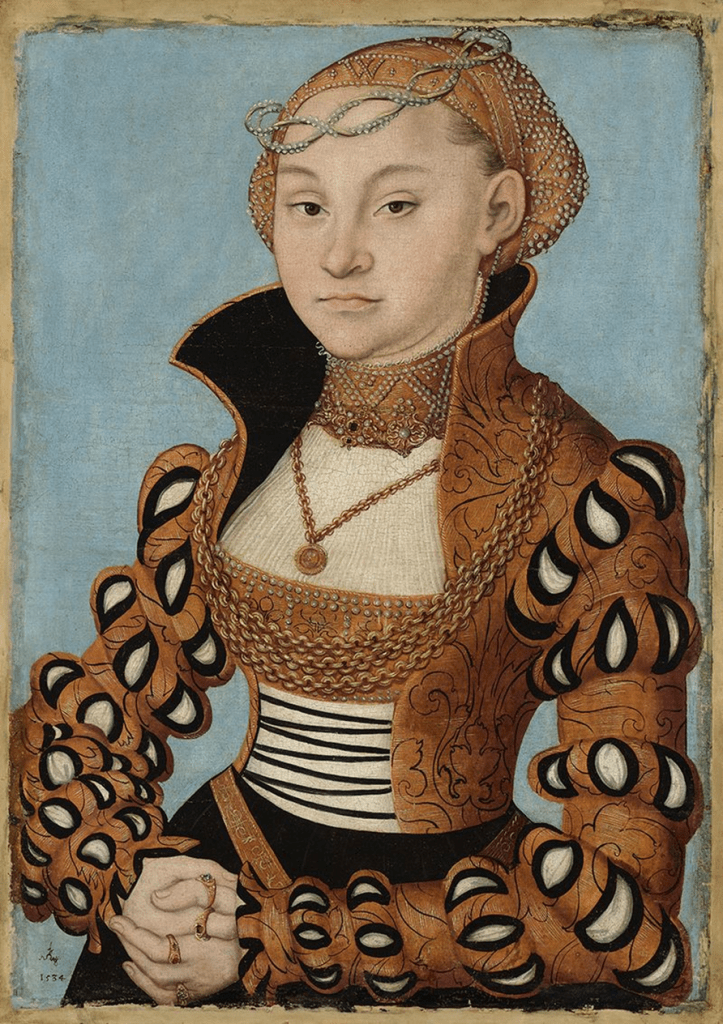
Several examples seem in period portraiture, particularly the works of Lucas Cranach the Elder.
*Note added after the fact: From examining art from the period, particularly portraits, there appears to be several variations or styles of caps that can be considered goldhaub. What I don’t really mention in my mention in my write-up, but did discuss in person, was that I have been focusing on one particular style of goldhaub (shown in the images provided) that features a rather distinct arrangement of two flat bands, often decorated, separated by a smooth flat section across the crown of the head, and with some sort of bag or net at the back of the head to contain the hair.
It is my personal theory that this style of goldhaub may be made up of two or more parts arranged on the head of the wearer. However, several of the other variations of goldhaub i have seen in period art absolutely appear to be all-in-one garments.
Materials:
I had previously made an attempt at a goldhaub using heavier fabrics that included cloth of gold, linen, and silk. While very opulent, I felt that the fabrics used may have been too bulky to achieve the level of finesse and elegance this cap appears to show in period portraits.
For my next attempt, I really wanted to try using the same pattern and construction method, but with thinner and lightweight materials to see what sort of difference it made.
For this goldhaub on display, as well as the one I am wearing, the primary fabric I used is a cotton/metallic cross woven quilting fabric that I bought several bolts of years ago. Sadly, these goldhaubs have just about used up my very last scraps of those fabrics.
This fabric makes up both the front and back bands, and the crowns.
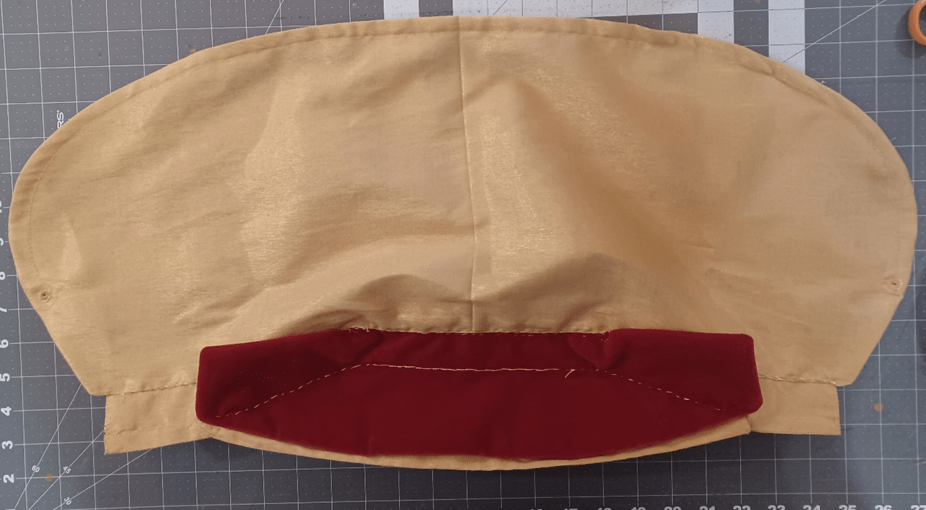
I used a velveteen for the lining of the main “crown” sections on both goldhaubs. I have found that velvet or velveteen linings on headwear can do a wonderful job of keeping stuff “stuck-on” to the head, almost like Velcro, and find it useful to incorporate when and where I can for added ease of wear.
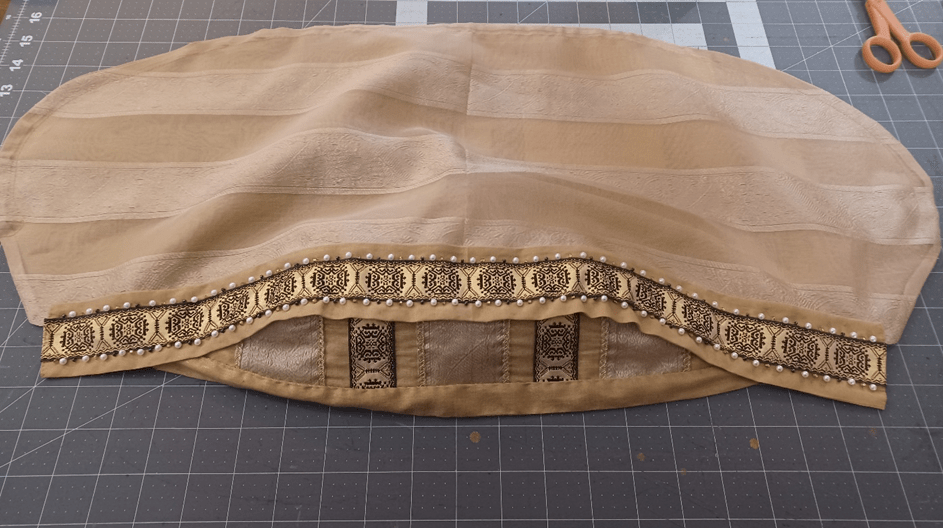
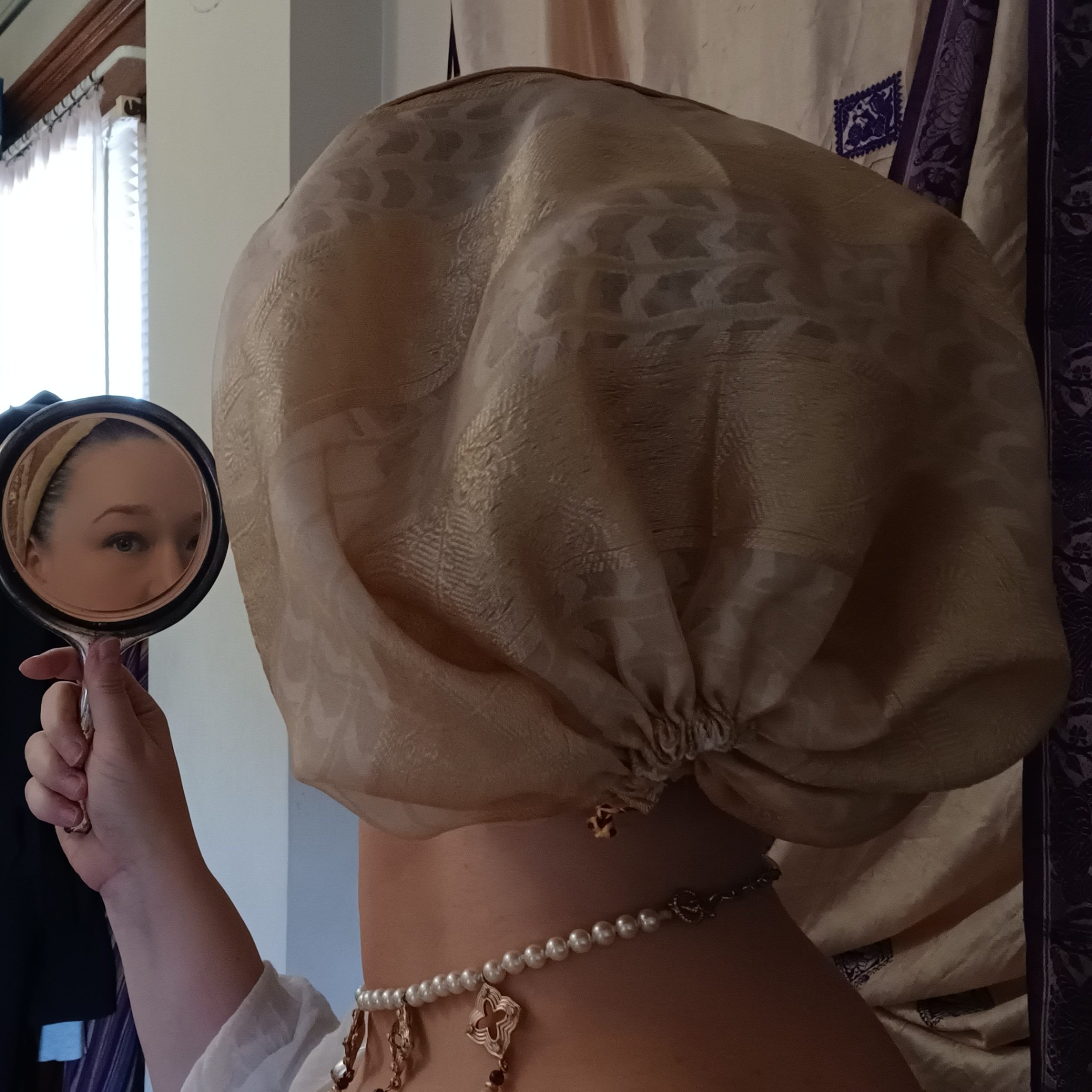
The “hoods”, or hair bag, section of each haub feature the same sheer pale gold fabric with denser woven stripes that feature a subtle embossed floral design. (I have no idea what the fiber content is, but I highly doubt it’s anything remotely natural. But man it’s pretty!) Since this fabric is so sheer, I choose to line it on both goldhaubs.
On the display model, I used some of the same gold cross woven I used for the bands and crowns. For the one I am wearing I went even lighter and used a second semi-sheer fabric featuring a cool zig-zag pattern woven in.
Both hoods feature an assortment of trims and the display hood features some impulsive beadwork because more is always better.
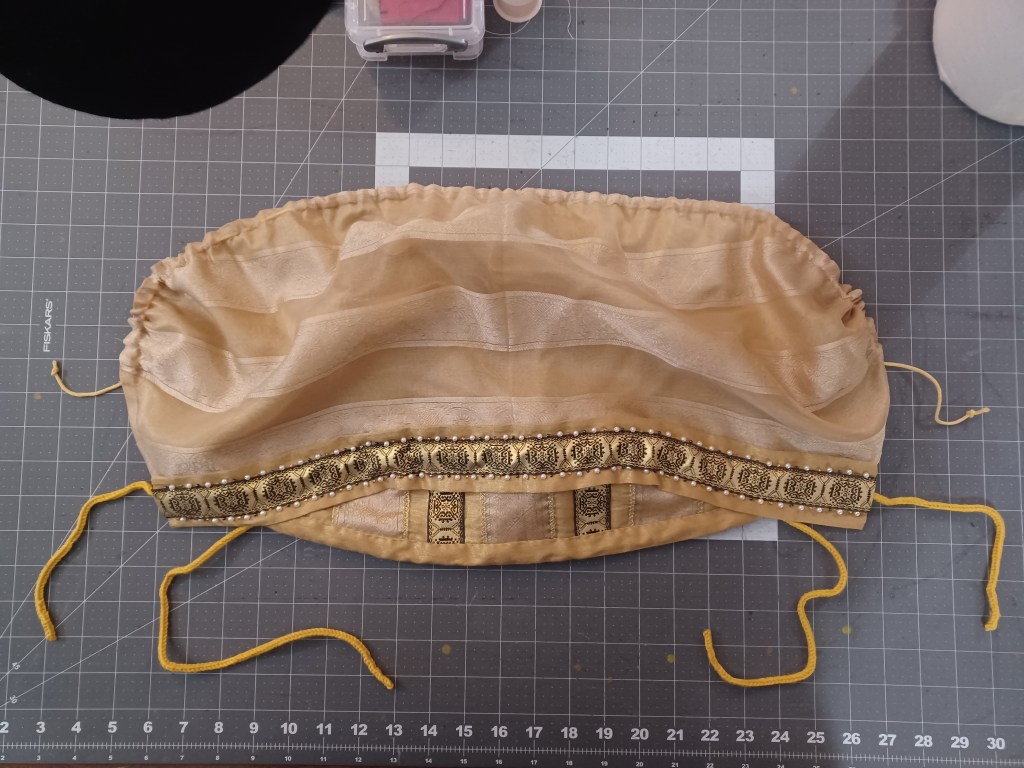
Finally each haub features three ties to adjust the size and fit it to the head. For these I made some lucet cords in coordinating colors. (Hopefully. I am technically writing this before I have found my lucet to make the cords. The may be tied using whatever useful ribbons or tapes I found lying around my sewing room) ((*Note to add: She did indeed find her lucet and made assorted cordage!))
Assembly:
Both goldhaubs were constructed using the pattern and method created by Mistress Genoveva von Lubeck of the SCA and shared on her blog Germanrenaissance.net.
As mentioned above, I have used this pattern once before when creating a goldhaub for Mistress Astridr Vígaskegg to wear during her elevation ceremony several Pennisc ago. As you can imagine, there was a hard deadline for that goldhaub, so I was ecstatic to find a pattern and method of attack already thought out and available to use!
Since that first goldhaub I have wanted to make another one using this pattern when I had more time to really be more focused and thoughtful.
Mistress Elisabeth Johanna von Flossenburg had asked if I would make her a goldhaud at some point, and so I have been squirreling away possible fabrics and trims for that project. Just recently I realized that I actually had some time to finally get back to my goldhaub project, and even had enough shiny bits of fabric and trim to make myself one as well, so now seemed like the time!
I assembled these the same way as put forth by Mistress Genoveva von Lubeck and as shown in How to Make a 16th Century German Goldhaube on the YouTube channel Quilts and Costumes.
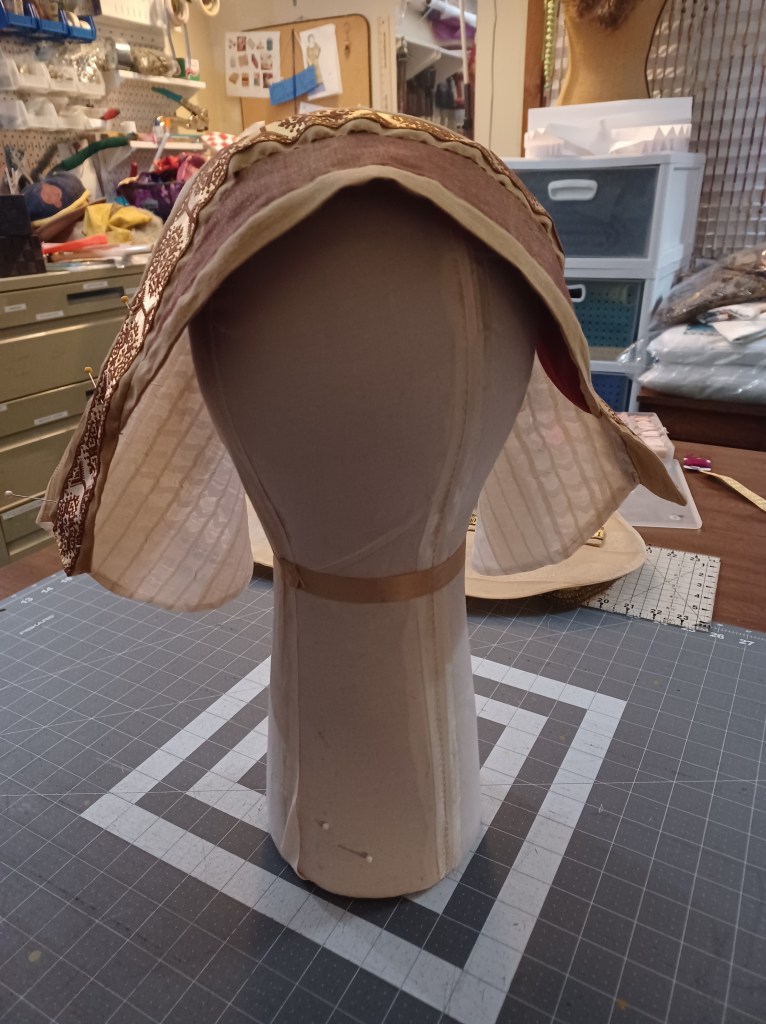
They each consist of 4 separate parts, including a Front Band, a Back band, a Crown, and a Hood. These four sections are then assembled into a single garment that takes some of its shape from the way you force (*note to add: I should probably say “ease” here instead of “force”. We want to gently ease the straight fabric to match the subtle curve of the crown, not beat it into submission. lol) straight and curved pieces together, and the rest of its shaping from the use of the drawstrings when worn.
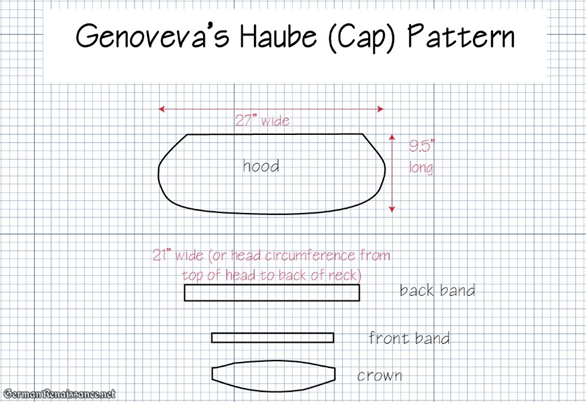
http://germanrenaissance.net/german-goldhaube-cap-of-silk-gold-and-pearls-pattern-instructions-documentation-and-notes/
In addition to wanting to experiment with lighter fabrics, part of the reason I wanted to go thru the process of making a goldhaud using this method again is because I have doubts as to whether this particular style of goldahub would have been a single one-piece garment, or if instead it might have been a collection of items all worn together to create this look. Perhaps along the line of the English Tudor and Elizabethan ( and later) eras Coif and Forehead Cloth combination.
I really wanted to make it up as a one piece cap again, and spend some time wearing it to help me work through my thoughts on the possible ways it could be done differently.

Assembly was pretty simple and straightforward. The upside of this methods construction is it’s very easy to do. You are working with small flat sections right up until the end. Adding trim and beads to those sections is very manageable because they are so manageable and flat.

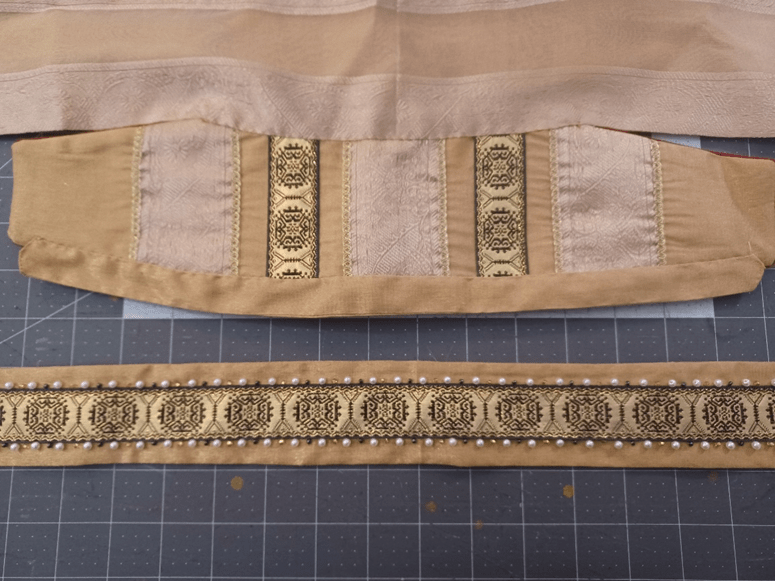
I did the majority of the initial construction using a sewing machine. However once I got to the point of attaching all the separate sections together, I found hand sewing was much easier. This part was a bit more finicky, as you are easing the straight edges of the bands to match the curve of the crown.
I found it fairly easy to get a smooth curve with the front bands. However on both goldhaubs I found getting a smooth look when attaching the back band challenging. On the one I made for myself I whip stitched it along the bands front edge, and then on the display model featured above I did a simple running stich hidden back in the bead line. However both attempts ended up with a gathers kind of lumpy look not seen in the period art work. I am now wondering if some of my issue was the trim I used on both bands. I think it may have contributed to the bands reluctance to ease into the curve.

When I was first putting this all together it all felt rather overly fussy and a like a lot of odd choices were being made, however as I went I came to appreciate how this method creates a very wearable shape that already just wants to fit on a human head with very little else needed. At this point, it actually started to remind me a lot of early English Hoods from the Tudor period.





Final Thoughts:
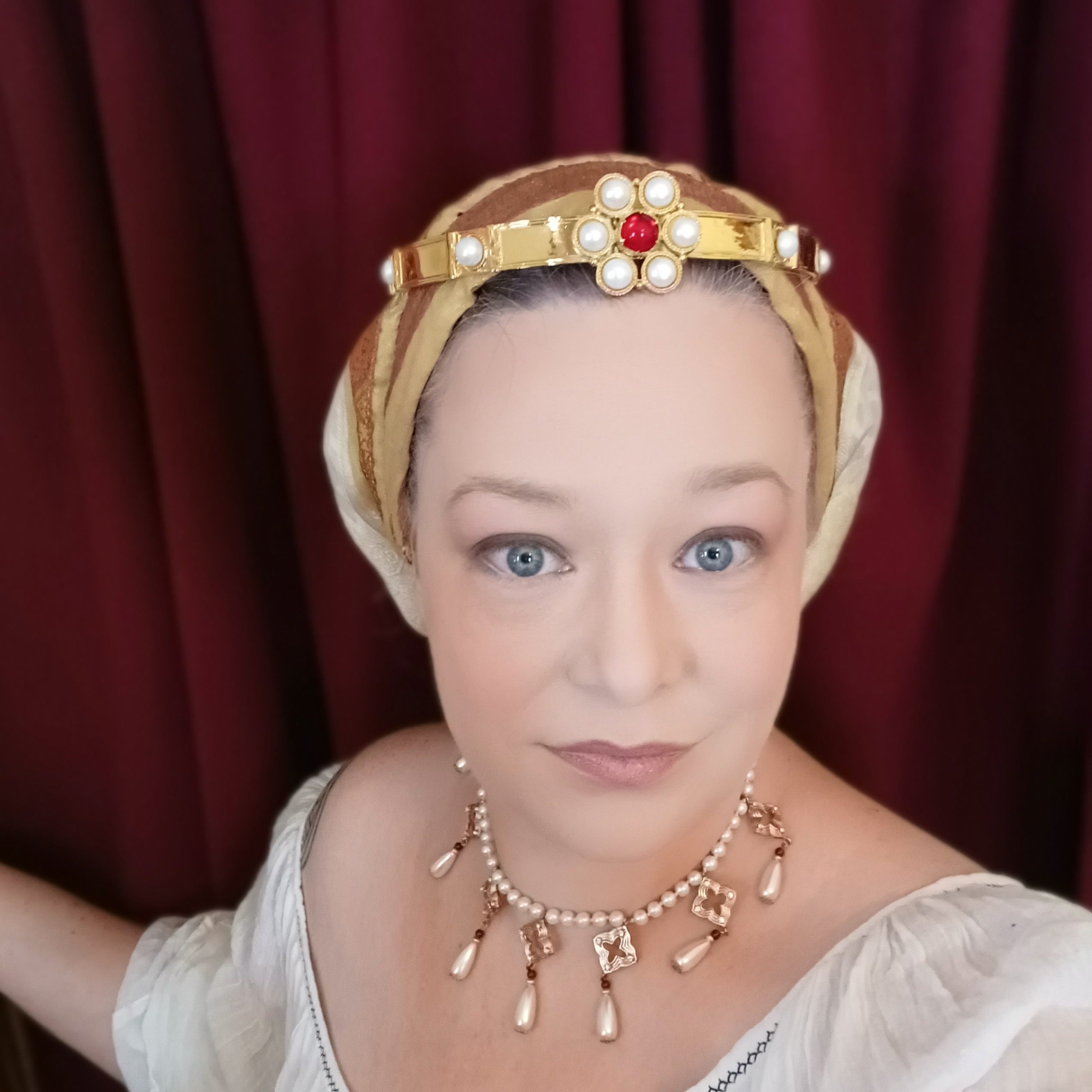
I have to say that this pattern and method has created a very wearable headpiece that very much replicates the look of the Goldhaubs seen in the portraits of the time. It is easy to construct and offers tons of room to customize and play around with. Additionally, I think a one piece garment with some slight shaping is particularly well suited for what we do in the SCA. It would be very easy to pack this flat, and there is no worry about losing of forgetting a key piece.
I also think is was worthwhile trying lighter fabrics. I think at this point I’ve managed the two extremes: About as heavy of materials as you’d want to use, and as light of materials as you want to use. Depending on the look desired I’d say you have a pretty big range to choose from when crafting one of these goldhaubs.
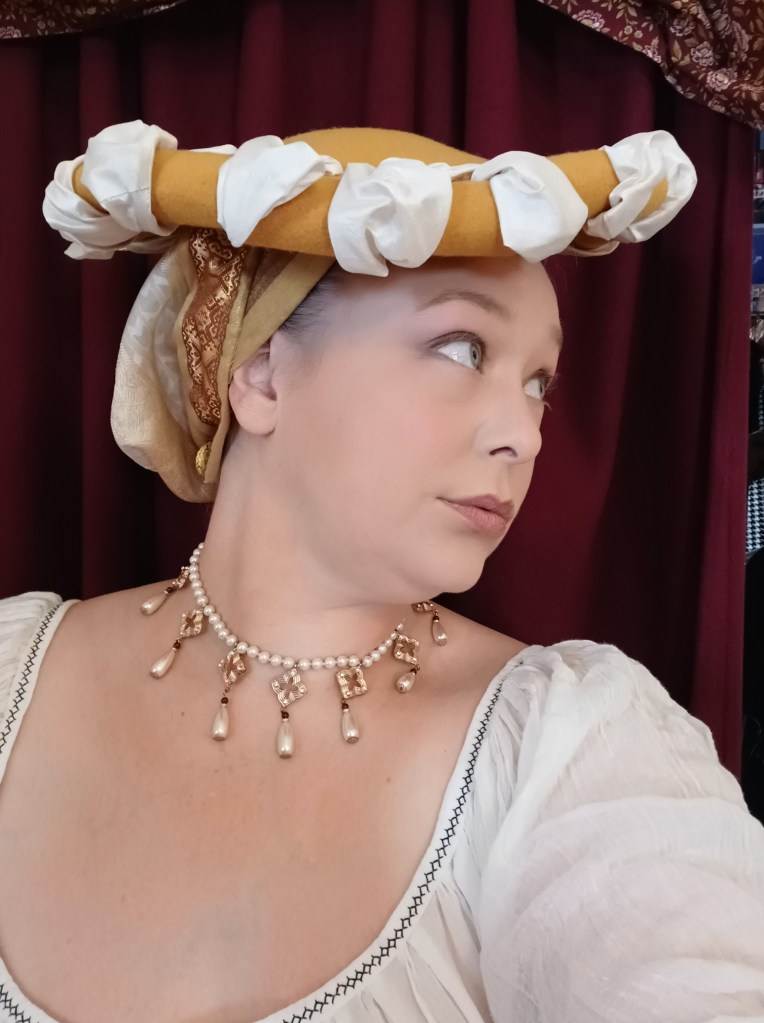
Honestly, after a full and busy day wearing the one I made for myself, I am obsessed and about to make this goldhaub my entire personality! It was so darn comfortable and easy to wear, it stayed put no matter what, even with me taking off and on the hat I was wearing over it many times. No pins! No headaches! This really is the first cap of any style I’ve worn that i can genuinely say I 100% enjoy wearing. All props to Mistress Genoveva von Lubecks…she created a really cool pattern and method!
In the future I would still like to experiment with a goldhaub made up of separate elements styled on the head. I would also like to play around with changing the proportions of the hood piece, making it wider and/or changing the overall shape a bit to see it i can get the more exaggerated look seen in some paintings. (*Note added: the original creator actually recommends stuffing out the back of the goldhaub with a bit of polyfill to help hold it out and create the iconic silhouette. I did not do this with mine because I personally really prefer to wear the closer fit.) Additionally, I would really like to try making a goldhaud that is just ALLLLLLL the way blinged out with pearls, as you see in so many of the period images.
Sources:
Mistress Genoveva von Lubecks blog Germanrenaissance.net
How to Make a 16th Century German Goldhaube on the YouTube channel Quilts and Costumes


How is a goldhaub a celebration?
A lovely hat is always a celebration!
The Goldhaub in particular has come to symbolize to that which is worthy of celebrating.
It is an already opulent and celebratory sort of headpiece on its own, but in my life it has taken on a more personal meaning of celebration as well.
The first Goldhaub I was asked to make was to celebrate a dear friend’s elevation into the Order of the Laurel, and it was a joy and honor to create such a thing.
The Goldhaub here on display was made for another amazing Lady who inspires me and it was created as a celebration of both that inspiration and friendship.
And the Goldhaub I impulsively made myself and that I am wearing today is a celebration of my preferred art and a big deadline reached giving me some time to “play” in my sewing room.
It is also a celebration of this 25th anniversary of the Tournament of the White Hart, an event that has been so special to me, not only in my SCA life, but has also played a significant role in my “Real World” life as well. Today, at this event, my husband and I celebrate the 21st anniversary of when we first met and he first fought in my honor and 20 years since we announced our engagement!

 Anything I Can Make