The following is the documentation for the Arts and Sciences Project I entered in the 2022 7 Pearls Championships. 7 Pearls is an event in the SCA Kingdom of Aethelmearc were the Champions of each of the Kingdom of Aethelmearcs seven Baronies compete against each other to see which Baronies gets bragging rights for the next year. This year, I had the honor of representing Barony of Blackstone Mountain (southern WV) in the Arts and Sciences.

Three Bronze Age Blouses and Why They Are SO COOL!
An Arts & Sciences Project by Lady Rannveig Hraejshvelgsneys Alfvinsdottir of the Barony of Blackstone Mountain
Today I am presenting you with a collection of blouses inspired by a collection of extant burial finds out Denmark that date back to around 1370BCE in the early Bronze Age.
This documentation is going to be somewhat informal, largely because I am writing this on the heels of recovering from post Pennsic Covid. However I am also realizing that this is rapidly turning into more of an “in-progress” project for myself than I’d originally intended. That being said, this little Bronze Age blouse has absolutely charmed and fascinated me, and I could not pass up a chance to share it in an Arts and Sciences forum.
Why is this blouse so cool?
One of the exciting things about this style of blouse is that we have three relatively well preserved extant examples of this style, found in three separate and assumed unrelated burials across Denmark, all dating to within a roughly 70 year time space in the 1300s BCE. When it comes to studying ancient textiles this is an almost absurd wealth of information and physical objects to have to examin.
The other neat thing about this style of blouse, and what initially drew me to this project, is the deceivingly simple cutting method used to create what is a fairly complex shaped garment.
I say deceivingly, because while the cutting and sewing is rather straight forward, the ability to come up with the idea to cut and shape fabric this way actually requires quite a bit of forethought and mental visualization. I consider myself rather good at 3D visualization and understanding how flat shapes can go together to create functioning garments, yet even I had several movements of having to just “trust the process” with the first blouse I made.
Why did I start this project?
To be very honest, this whole project sits before you today because I messed up a fabric order for another project.
I had (thought) I ordered some nice heavy linen for part of a fighting tunic. What I got was a very loosely woven linen…gauze, that absolutely would not survive two minutes in armor.
I pre-washed it anyway, and when it came out it was so nice and soft, I decided to see if I could make something for my daughter to wear, since she was in need of a whole new wardrobe for Pennsic. There wasn’t much, and the open weave called to mind a youtube video about a cleaver Bronze Age top I had come across during the height of the pandemic lock down.
I tracked back down that video (link in sources) and it was actually a tutorial by the Dartmore National Parks on making your own Bronze Age blouse. In probably less than an hour from the initial idea, I had a more than functional top that not only fit my kid, but that looked great, and *gasp* that my highly opinionated pre-teen genuinely liked.
At this point I was curious to see if this same simple cutting method would work for a more…mature figure, and out of sturdier fabric with less inherent ease.
After digging through my stash of fabrics I had two lengths of plaid woven cotton. I recreated the top using my measurements, as well as a second one for my daughter. For hers I had to fudge a bit, shortening the sleeves in relation to the body, since some of the fabric had already been used in another project and was kind of an odd shape.
I am thrilled to say that this same cutting method seems to produce a more than worthy result, regardless of body size, and that the denser woven cotton produced as equally functional and wearable a result as the looser woven linen. I was also very happy with the ease with which I was able to tweak the pattern as needed to work with available fabric.
All three tops were worn extensively at Pennsic, under a variety of conditions, and preformed fantastically!
Three Bronze Age Blouses
The three extant blouses we have featuring this same basic method of cutting all come to us from Oak-coffin burials discovered throughout Denmark. This method of burial created conditions that aided in preservation of the textiles and other artifacts to a remarkable degree.
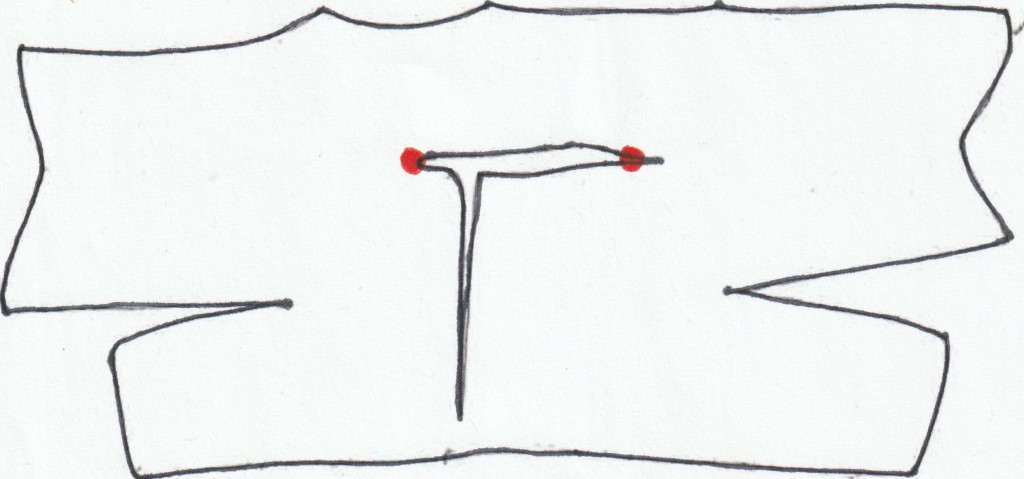
The commonalities between these three blouses are primarily in the way they were cut and shaped. All three are formed out of a basic rectangle of fabric and shaped by two cuts that separate the “sleeves” from the “body”. Then by way of folding over the top of the arm section horizontally and sewing up, then folding the body section vertically to meet in the center and sewing up, and finally connecting those two sections thus creating a “T” shaped seam at the back of the garment.
(This is difficult to describe in writing, please see the images and samples included with this presentation for a clearer example)
The stitching found on all three garments tend towards very simplified basic stitches, and include primarily whipstitch, running stitch and variations of blanket stitching.
At seams the fabric edges are generally laid one on top of the other and sewn up that way, rather than the “right sides together” method that creates a hidden internal seam we more often see these days. There is some thought that this method of sewing could be a holdover from working with animal hides as opposed to woven fabrics.
Interestingly, all three blouses also feature bands made up of pieced together patches of fabric along the lower hem, seemingly to lengthen the garment. From what I can determine, it appears that these bands were added at or near to the time the garment was initially constructed, and not as a later addition (added perhaps to account for growth, or possibly prior to burial?).
On all three blouses the neckline is a simple rounded slit, along the line of a modern “boat” neckline, cut into the garment and finished with a variation of blanket stitching, and in one case, embroidery.
The Borum Eshoj (sometimes AEshoj) Burial was unearthed in 1871, and contained a possible family group of three individuals, 2 men, and an older woman. The woman was estimated to be between 50 and 60 years old at time of death, and has been described as having a “short and stocky” build. The Burial is dated to around 1350 BCE.
Some key aspects of the Borum Eshoj blouse are that is was of a wool tabby weave that may have been fulled prior to cutting to shape.
It also features small patches of fabric on either side of the rounded slit that creates the neck hole, presumably to reinforce the fabric in an area more likely to take stress. In some texts they describe these patches as reinforcing gussets, bringing to mind the small gussets found in Elizabethan smocks that both reinforces and shape the neck hole prior to adding the collar.
Additionally this blouse features a long off center slit down the front of the neckline. It is thought that this slit was cut after the garment was made, possibly to make dressing the already deceased woman easier.
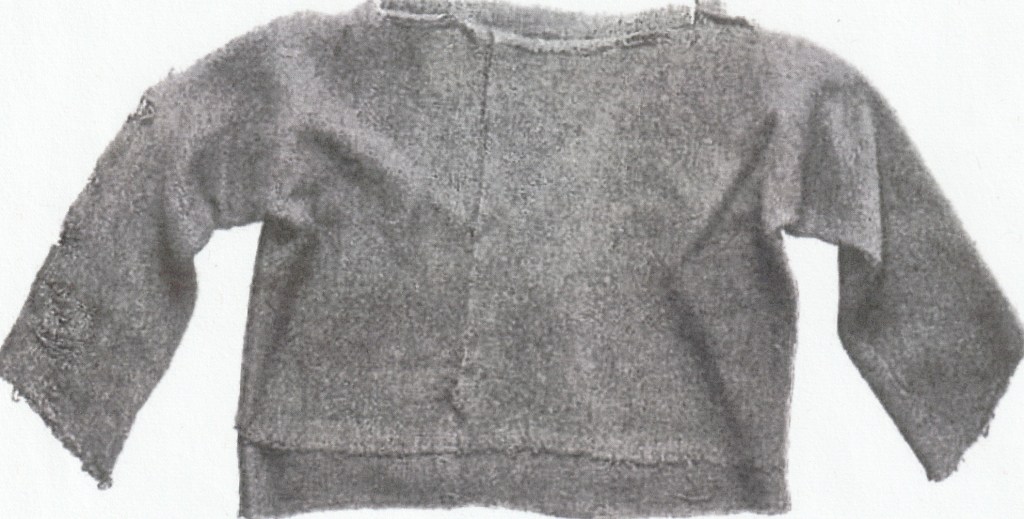
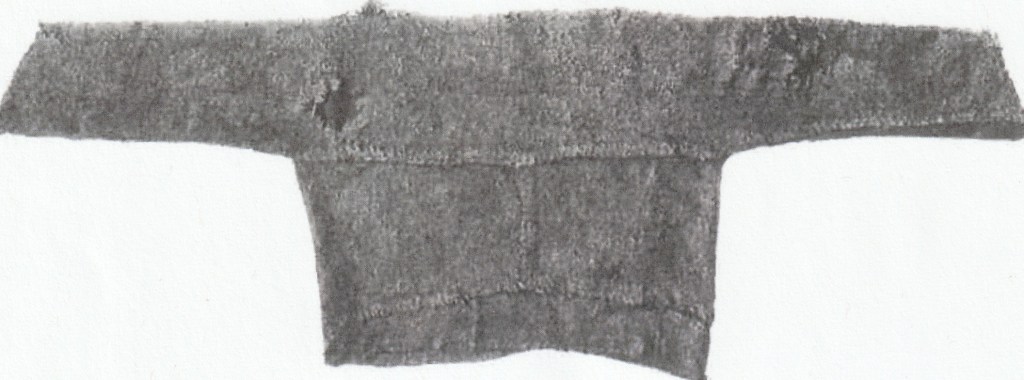
The Egtvd Burial was discovered in 1921, and had a single oak-coffin containing the remains of a young woman, estimated between 16 and 18 years old at time of death and estimated to be around 5ft 3in. The burial dates to 1370 BCE.
Alongside with the young woman in the same coffin was the remains of a 5-6 year old child wrapped in a blanket.
The blouse from this find is of an un-fulled, rather loosely woven fabric (this is the one my loose woven linen called to mind), and features no reinforcing patches or gussets at the neckline.
Interestingly, this is also the burial find that gave us the curious and often debated string or cord skirt.
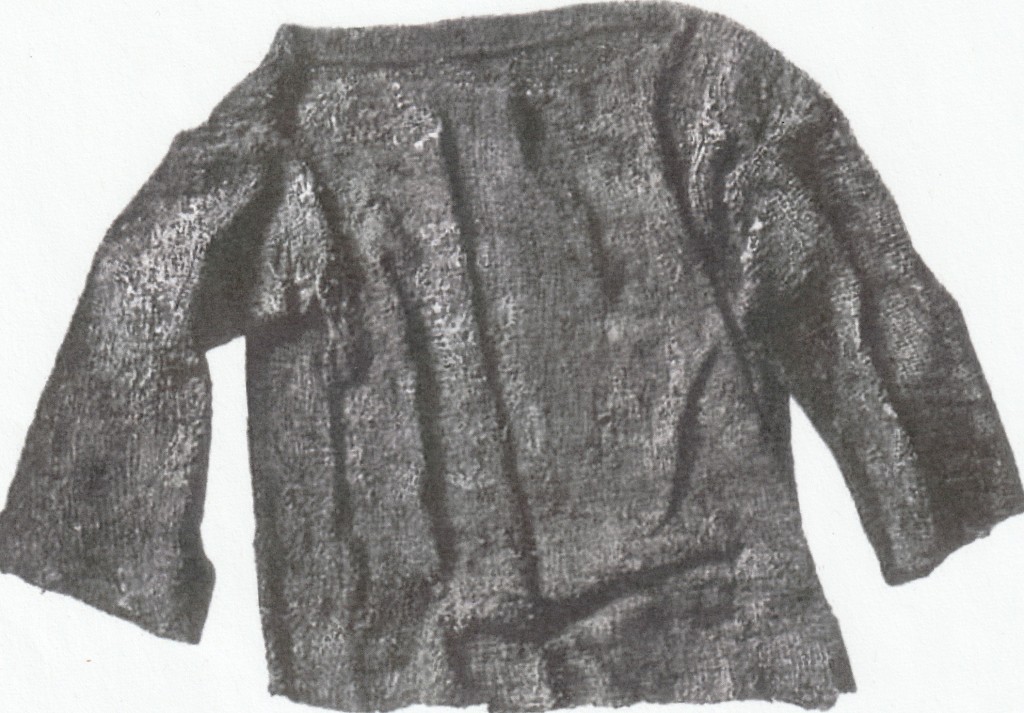
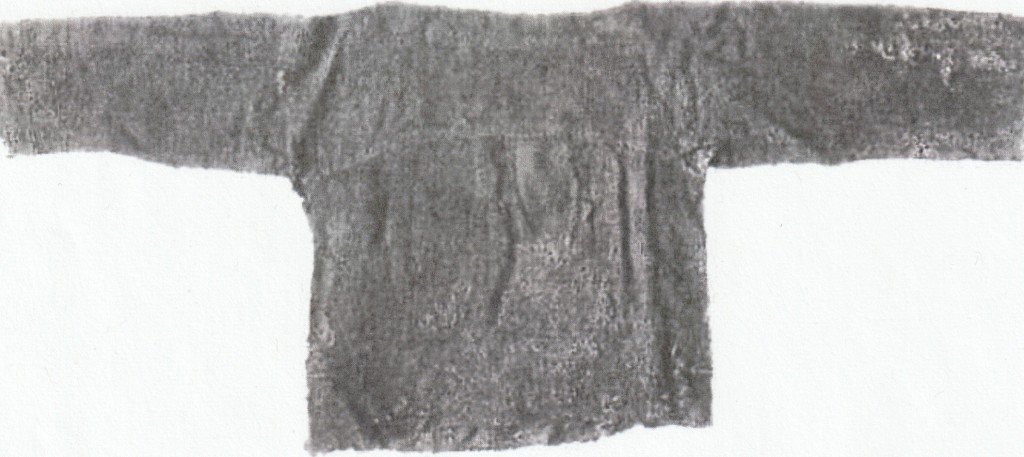
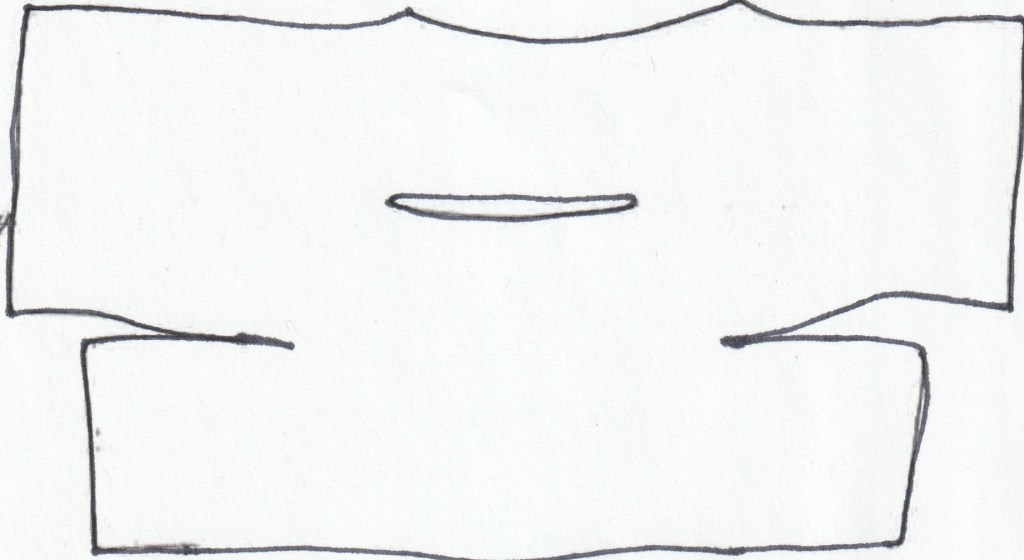
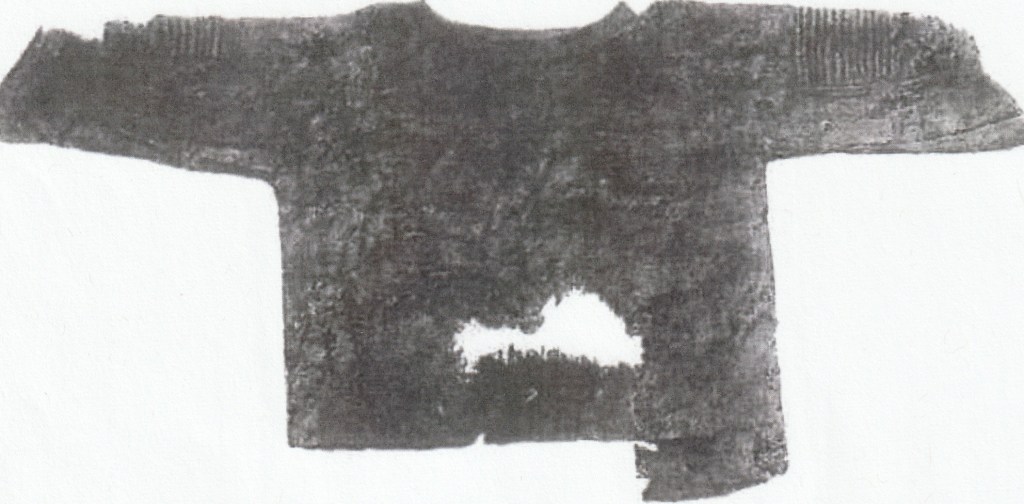
The Skrydstrup Burial. Found in 1921 and containing a single young woman, aged 18-19 and estimated to be around 5 foot 6 in tall. This burial is dated to 1300BCE.
This blouse is of an un-fulled woolen fabric, and according to some descriptions includes strips of fabrics added to the armpit area as gores for added ease of movement.
The most exciting aspect of this blouse to me personally is that it features several embroidered elements. On each sleeve it what appears to be a form of couching, or maybe pin tucking, surrounded by what I would call outline stitching. Additionally, around the neck hole of the blouse is what appears to be several rows of what looks like a form of buttonhole lace.
This is very much the blouse that has made me decided this is an ongoing project!


Making a Bronze Age Blouse
Measurements needed:
Measurement A = around the widest part of the torso
Measurement B = from the top of the shoulder to the desired length of blouse (I generally aim for ending just above my hips)
Measurement C = from the top of the shoulder to about 2-3 inches below the armpit.
Cutting the fabric:
Measurement A gives you the total width of fabric needed
Measurement B + C gives you the total length of fabric needed

1: Fold down the top edge of your fabric piece the amount of measurement C. (I generally iron in all my folds to keep it tidy, but if your fabric is agreeable you can just fold and skip ironing)
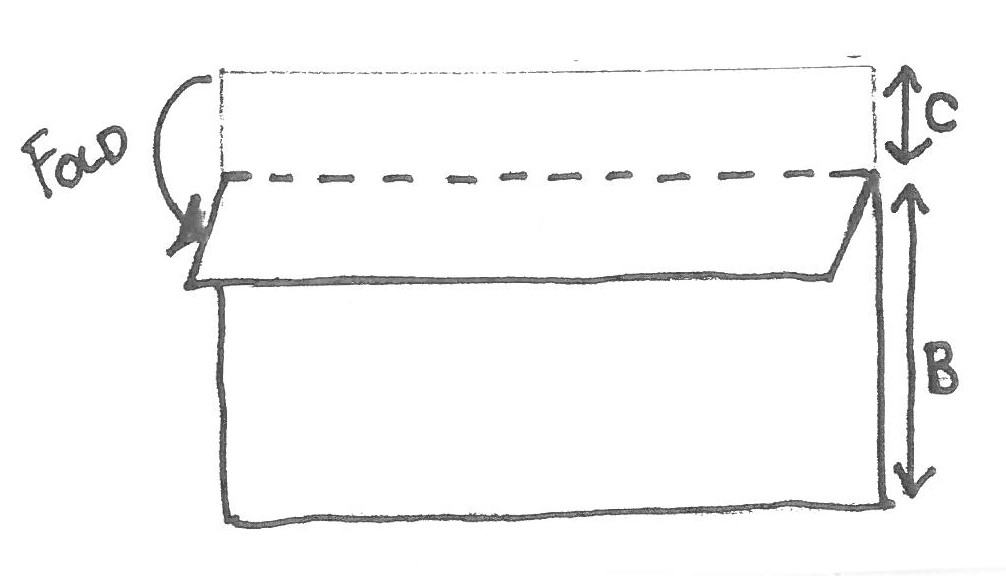
2: Fold in half width-wise, keeping the first fold intact
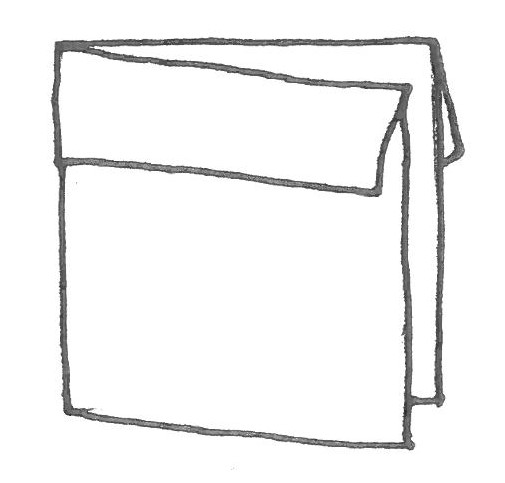
3: from the top center measure half the width you’d like your neckline to be, about 3-4 inches. (I generally err on the side of too small, since we can refine the neckline size and shape later) After measuring, go ahead and cut out a narrow strip that length along the top edge.

4: Divide measurement A by 4. This gives us measurement D
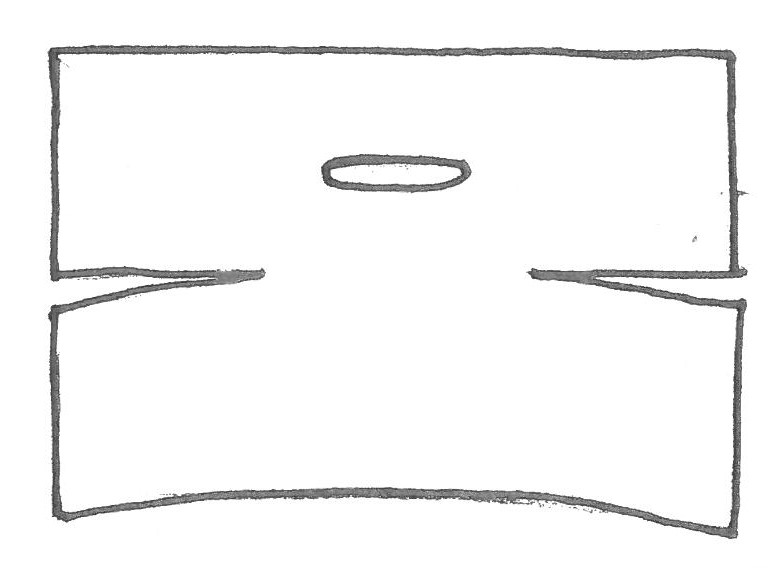
5: Mark measurement D, starting at the raw edge and going towards the center fold along the folded edge of C. Cut along marked line.

6: Unfold fabric, and you should have a piece of fabric that now looks approximately like this:
Sewing it up:
1: Fold the fabric section created by D towards the center. Pin and sew.
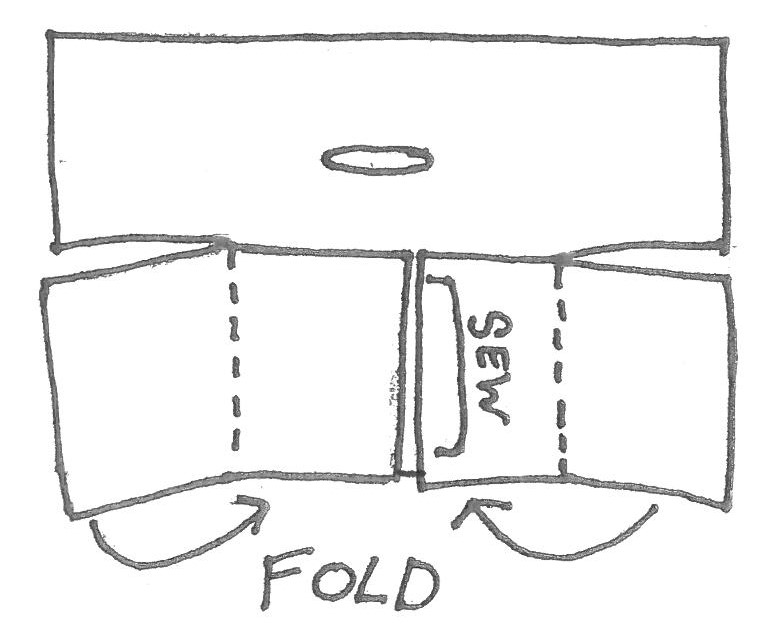
2: Fold down the top section (C), pin and sew, creating a single long seam from one sleeve edge, catching the top of the first section sewn, and ending at the other sleeve edge.
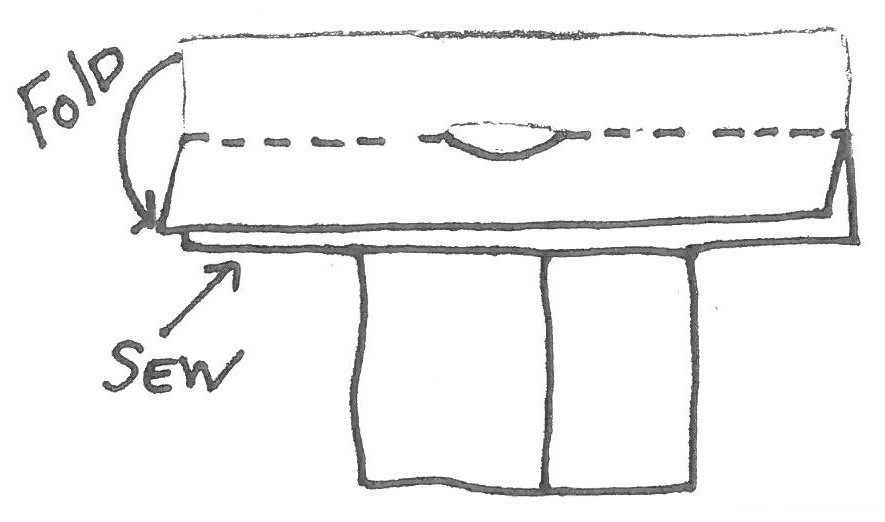
At this point you can now try on the blouse and mark any refinements you want to make to the neck line and/or sleeve and hem lengths.
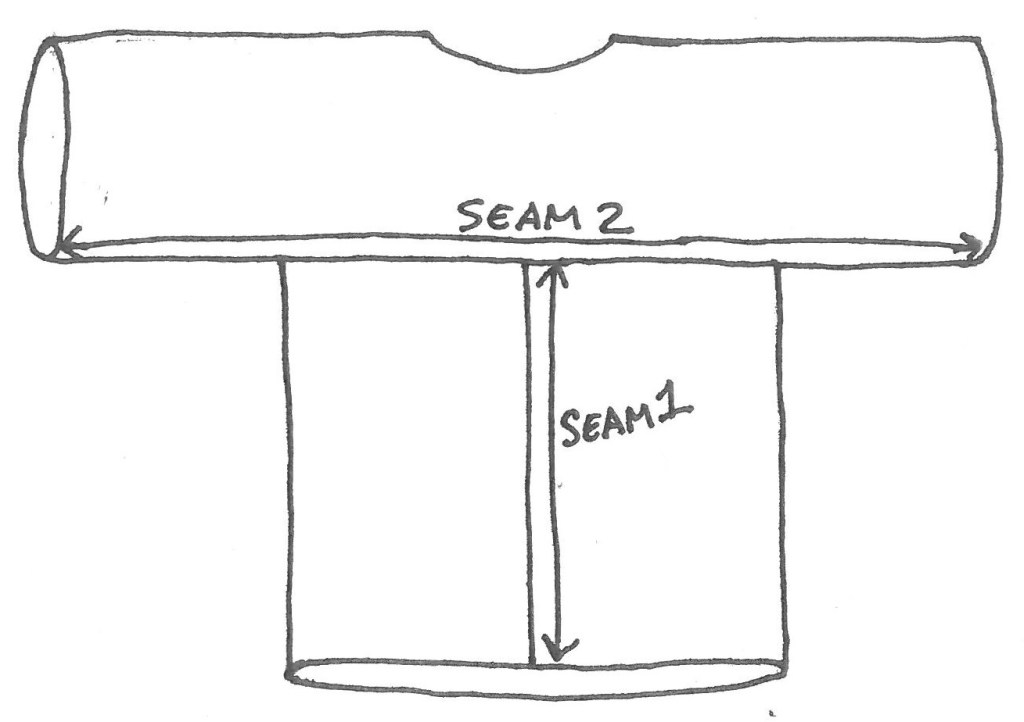
To finish the neckline I’ve found a hand sewn rolled hem is actually easier than trying to finish it on the machine. For the sleeve and hem feel free to finish as best suites you.
Sources
Online:
Dartmoor National Park You Tube Channel: https://www.youtube.com/c/DartmoorNationalPark , and specifically the video “How to make a Bronze Age blouse” https://youtu.be/u6qY6Ey3crk This is the video that inspired this project. Includes a great visual tutorial on constructing the blouse.

 Anything I Can Make